What is DTV4All? DTV4All is a project funded by the European
Commission, under the CIP
ICT Policy Support Programme, to facilitate the provision
of access services on digital television across the European
Union.
What are access services?
People who are hard of hearing or deaf need subtitles or deaf
signing to be provided with television programmes if they are to
fully appreciate its dialogue. People who are partially sighted or
blind need audio description provided with a television programme
if they are to fully appreciate the context of what they hear.
Such services enable their users to access the storyline of a
television programme so are known as access services.
The ethos of DTV4All
There are two basic scenarios for the provision of access
services. In the first, those with impairments are expected to buy
a suitable integrated digital television or a specialised digital
television set-top box that can support the access services they want or
have it provided by the public health system. In the second,
society takes collective responsibility for inclusivity and
ensures that set-top-boxes targeted at the general user can
support core access services, especially given that certain
improvements made for vulnerable groups can be beneficial to all
users. DTV4All promotes
inclusivity.
Why has DTV4All been funded?
The switch-off of analogue television in Europe by 2012 represents
both a challenge and an opportunity for access services. It
represents a challenge for two very different reasons. Firstly,
many people who have had no problems accessing analogue television
will experience some difficulty in accessing digital television.
The extent of this issue is such that approximately 15% of
Europeans have difficulties in accessing digital television for
reasons such as:
Hearing impairments
Dyslexia
Visual impairments
The complexity of
setting up a digital receiver or set-top box
Remote controls they
find difficult to use
Electronic Programme
Guides (especially when there are over one hundred
chan¬nels to choose from)
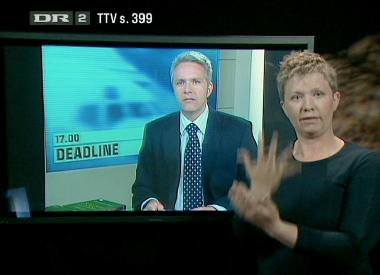
Figure 1: Screenshot of a signing service provided on a virtual
channel (DR: Danish Radio)
Secondly, the analogue
switch-off will introduce widespread improvements to the quality
of existing digital television programmes, collectively known as
second generation digital television, such as high definition
television (HDTV). As the amount of information that can be sent
by a digital television transmitter is limited this poses a
challenge to some existing access services. For example, the
amount of information in a high definition television programme is
significantly higher than the amount of information in the same
programme delivered in standard definition. This means that there
will be pressure to reduce the amount of transmitted information
devoted to access services due to the demand for programmes to be
delivered in high definition.
An example of a service likely to come under such pressure is the
provision of a virtual channel which allows a signer to be shown
more prominently than in conventional portrayals of a signer on a
screen illustrated in Figure 1 above. Such a service is valued by
its users because the facial expressions of the signer can be
clearly seen and these are an important part of the communication.
However, showing the signer in this way requires more information
to be sent than conventional portrayals.
The opportunities to improve access to digital television for
those with physical, mental or age-related impairments that arise
due to the analogue switch-off take two forms, opportunities to
extend the provision of existing mature access services to
European countries that do not currently provide them, and
opportunities to provide new kinds of access services known as
emerging access services. To ensure the challenge is addressed and
the opportunity exploited, DTV4All takes action on two fronts:
Ensuring the
widespread adoption of mature access services for first
generation digital television
Identifying,
assessing and promoting emerging access services for second
generation digital television
The most valuable
contribution DTV4All can make is to identify the enablers that
will allow a core set of access services to be offered in all EU
member countries in the near future.
Objectives of DTV4All
Offer and evaluate
mature subtitling, audio description, audio subtitling and
signing services in a minimum of four territories within the
European Union for at least 12 months.
Identify
improvements to existing access services and ways of
addressing the key technical, organisational and legal
obstacles to the sustainable take-up of these services in the
timeframe 2008-2010 throughout Europe.
Identify and
prioritise key emerging access services, and the devices and
platforms needed to support them for the period 2010-2012 in
terms of technological feasibility, perceived value to their
intended users and business model viability.
Make recommendations
regarding mature and emerging access services to bodies
representing stakeholders in the access service value chain on
the basis of which these bodies can take appropriate action in
relevant standardisation bodies.